
Welcome to the Minnesota Master Naturalist Program!
The mission of the Minnesota Master Naturalist Program is to promote awareness, understanding, and stewardship of Minnesota’s natural environment by developing a corps of well-informed citizens dedicated to conservation education and service within their communities.
Any adult who is curious and enjoys learning about the natural world, shares that knowledge with others, and supports conservation can be a Minnesota Master Naturalist Volunteer. If you enjoy hiking, bird watching, following tracks, or identifying wildflowers, you'll love being a Minnesota Master Naturalist Volunteer. Minnesota Master Naturalist Volunteers are a motivated group of fun and interesting people: teachers, retired professionals, nature guides, hunters, eco-tour operators, farmers, and...YOU!
Becoming a Minnesota Master Naturalist is easy!
1) Create an account by clicking on "My Account."
2) Register and pay to take a course - either Big Woods Big Rivers, North Woods Great Lakes, or Prairies and Potholes.
3) Complete the course and you are a Minnesota Master Naturalist!
Minnesota Master Naturalists are required to log 40 hours of volunteer service and participate in 8 hours of advanced training annually.
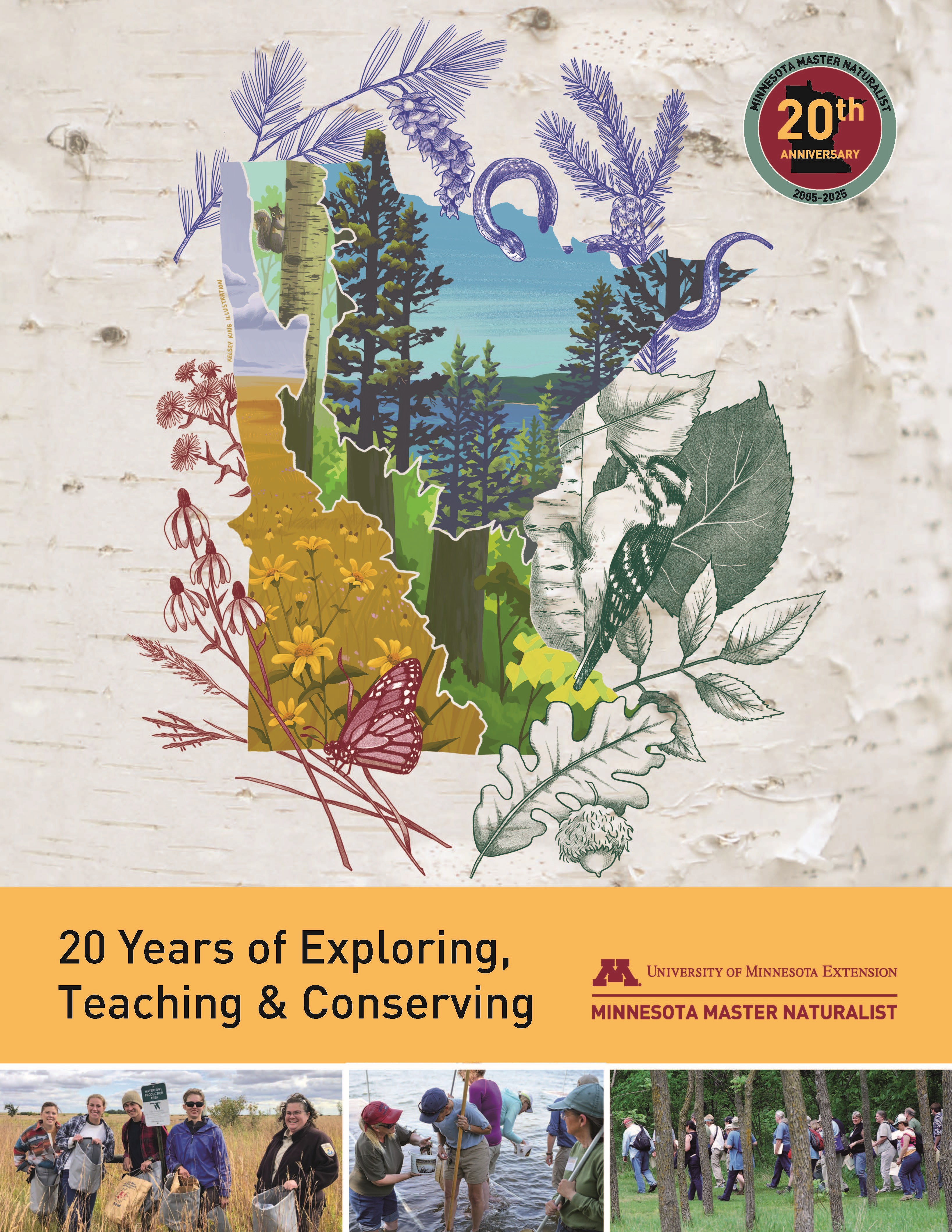
Minnesota Master Naturalist 20th Anniversary Publication
View publication here and learn more about the program's impacts over its first 20 years
Explore...
- Your neighborhood
- Your local natural areas
- Minnesota’s state parks and public lands
Teach...
- Family and friends
- Neighbors
- School groups
- People visiting nature centers
Conserve...
- Monitor local natural areas
- Restore ecosystems
- Assist with research
- Collect scientific data